Every page on this site follows the same ten rules. Here they are, so you can hold us to them.
The direct answer
Ten rules: read the panel, reference every amount, grade in three bands, check artwork against the label, put safety first, never estimate, compare the sellers, cap claims by growth timeline, name what does more, and link to authorities rather than sister sites.
The ten rules
- Read the panel, not the page. Every amount published here is the one printed on the Supplement Facts label. Where a selling page differs from the label, the label is quoted and the difference is noted.
- Set every amount beside its reference. NIH ODS Daily Values, RDAs and adequate intakes for every nutrient, so a reader can see whether a figure is a dose or a gesture.
- Grade in three bands and say why. Supported, Partly, Flagged — each with the arithmetic that put it there.
- Check the artwork against the panel. Ingredients claimed in graphics and absent from the label are named as absent.
- Safety first, literally. The biotin lab-test caution, the vitamin A upper limit and the iodine note appear near the top of every relevant page.
- Never estimate. If a figure is not printed, it is reported as not printed.
- Compare the sellers. Where two pages disagree with each other or with the label, both versions are published.
- Timeline caps every claim. Nails at 3 mm a month, hair at 1 cm, skin over 28 days. No claim is allowed to run ahead of biology.
- Name what does more. Sunscreen, protein, sleep and a blood test are named wherever they outperform the product.
- Link to authorities, not sister sites. External links go to NIH, FDA, NIAMS, AAD and FTC — never to other pages selling the same product.
Why we never estimate
Gelagen prints everything, so estimation is not needed here — but the rule still governs the site. It would be easy to write “probably enough vitamin C”; the panel says 20 mg and 22% DV, and that is what we publish.
Sources
The printed label wrap supplied for this audit; the two selling pages fetched at the time of writing; NIH Office of Dietary Supplements fact sheets; the FDA safety communication on biotin and laboratory tests; NIAMS, AAD and FTC guidance. All are linked from the pages that rely on them.
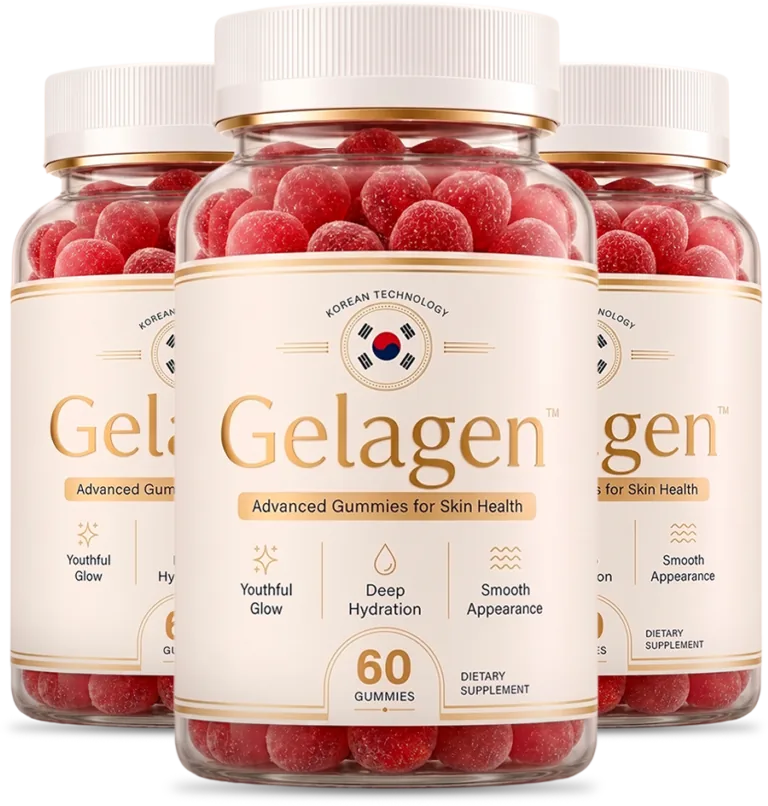
Gelagen Official Website
per bottle on the 6-bottle pack · free US shipping on 3 and 6
Check Current Price 60-day guarantee · official checkout only