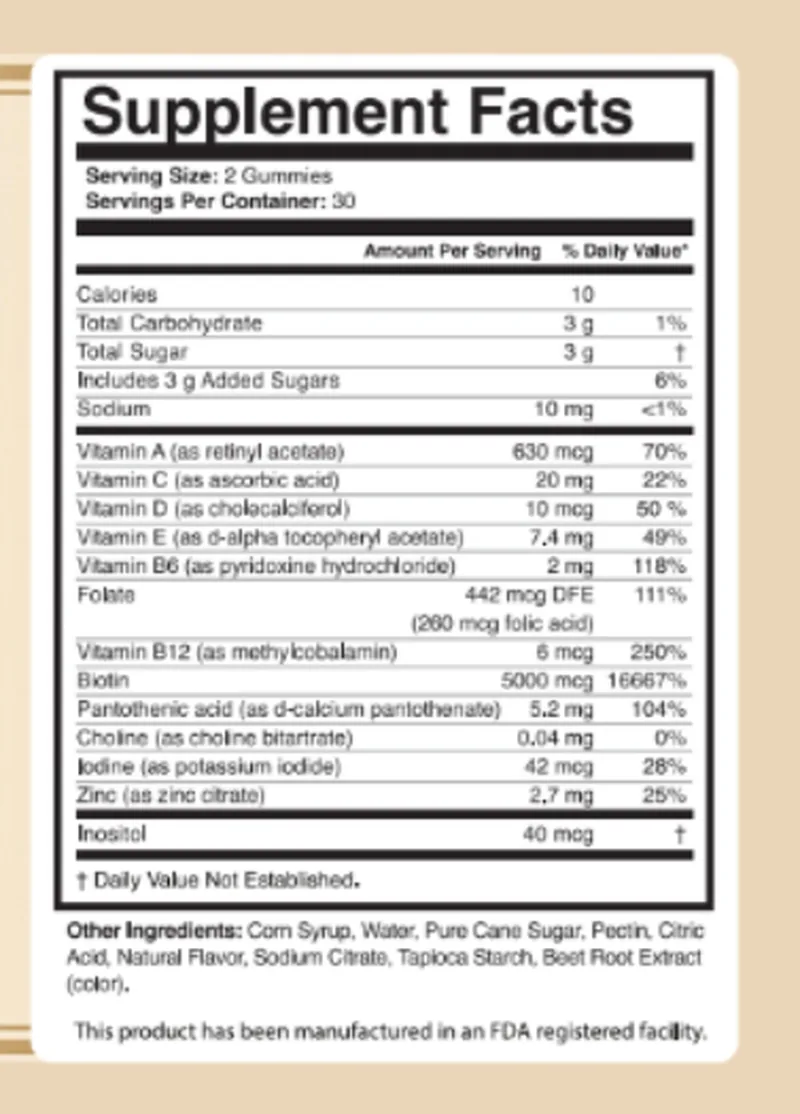
Thirteen nutrients, thirteen printed amounts, no blend. This is the most complete beauty-gummy label this desk has read — which is exactly why every figure can be set beside its reference intake and graded. Ten hold up. Three do not. Two ingredients the artwork promises are absent entirely.
The direct answer
Per two gummies: biotin 5,000 mcg, B12 6 mcg, B6 2 mg, folate 442 mcg DFE, pantothenic acid 5.2 mg, vitamin A 630 mcg, vitamin C 20 mg, vitamin D 10 mcg, vitamin E 7.4 mg, zinc 2.7 mg, iodine 42 mcg, choline 0.04 mg, inositol 40 mcg. All printed. Ten are working doses; vitamin C, choline and inositol are not. No collagen, no hyaluronic acid.
Gelagen is a dietary supplement, not a medicine. Each serving contains 5,000 mcg of biotin, which the FDA has warned can distort certain laboratory blood tests — tell every clinician who orders blood work. It contains 630 mcg of preformed vitamin A (ask first if pregnant) and 42 mcg of iodine (ask first if you have a thyroid condition). Persistent skin, hair or nail changes need a dermatologist, and nothing swallowed replaces daily sunscreen.
The panel against the references
| Ingredient | Printed amount | Used in research |
|---|---|---|
| Biotin | 5,000 mcg (16,667% DV) | 30 mcg/day adequate intake for adults |
| Vitamin B12 (as methylcobalamin) | 6 mcg (250% DV) | 2.4 mcg/day RDA for adults |
| Vitamin B6 (as pyridoxine HCl) | 2 mg (118% DV) | 1.3–1.7 mg/day RDA for adults |
| Folate (442 mcg DFE from 260 mcg folic acid) | 442 mcg DFE (111% DV) | 400 mcg DFE/day RDA for adults |
| Pantothenic acid (as d-calcium pantothenate) | 5.2 mg (104% DV) | 5 mg/day adequate intake for adults |
| Vitamin A (as retinyl acetate) | 630 mcg (70% DV) | 700–900 mcg RAE/day RDA; 3,000 mcg upper limit |
| Vitamin C (as ascorbic acid) | 20 mg (22% DV) | 75–90 mg/day RDA; skin studies use far more |
| Vitamin D (as cholecalciferol) | 10 mcg (400 IU) (50% DV) | 15–20 mcg/day RDA for adults |
| Vitamin E (as d-alpha tocopheryl acetate) | 7.4 mg (49% DV) | 15 mg/day RDA for adults |
| Zinc (as zinc citrate) | 2.7 mg (25% DV) | 8–11 mg/day RDA for adults |
| Iodine (as potassium iodide) | 42 mcg (28% DV) | 150 mcg/day RDA for adults |
| Choline (as choline bitartrate) | 0.04 mg (40 mcg) (0% DV) | 425–550 mg/day adequate intake for adults |
| Inositol | 40 mcg (no DV established) | 2,000–4,000 mg/day in most human studies |
Comparing Gelagen bundles
The Gelagen discount is applied by bundle size: $79 a bottle for two, $69 for three, $49 for six, with free US shipping on the larger packs.
Check Gelagen Bundle PricesOfficial website checkout · 60-day guarantee · confirm the terms before paying
Every nutrient, examined
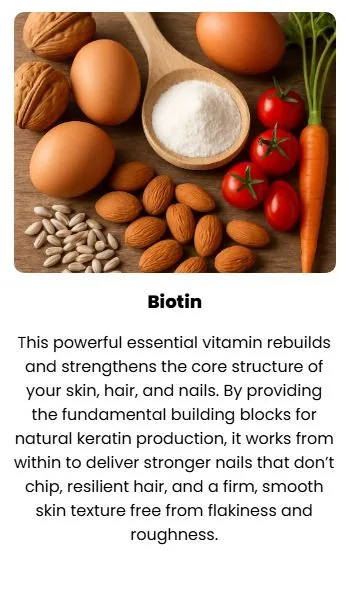
1. Biotin Flagged
Printed: 5,000 mcg (16,667% DV) · reference: 30 mcg/day adequate intake for adults
Why is there 5,000 mcg of biotin in Gelagen?
Because biotin is the nutrient beauty gummies are sold on, and the amount is 167 times the adult adequate intake. It is printed, which is more than most labels manage — and it carries a caution the label does not mention.
Biotin sits in the enzymes that build keratin, and true deficiency does cause hair loss and brittle nails. Deficiency is rare in anyone eating normally, and the evidence that megadoses help people who are not deficient is thin. What is not thin is the FDA's 2017 safety communication: biotin at supplement doses can cause falsely high or low results on certain laboratory tests, including some troponin assays used to assess heart attacks and some thyroid panels. At 5,000 mcg Gelagen is squarely inside that range. Neither the label nor either competing page tells you this.
Worth knowing: Tell every clinician who orders a blood test that you take 5,000 mcg of biotin. Ask whether to pause it beforehand. · FDA — biotin and lab tests
2. Vitamin B12 (as methylcobalamin) Supported
Printed: 6 mcg (250% DV) · reference: 2.4 mcg/day RDA for adults
Is Gelagen's B12 a good form?
Yes. Methylcobalamin is the active form, and 6 mcg comfortably covers the adult RDA. This is one of four form choices on the label that went the better, pricier way.
B12 contributes to normal red blood cell formation, and red blood cells are what carry nutrients to the base of every follicle. Deficiency is genuinely linked to hair changes, and is common in vegans and adults over sixty. For anyone not deficient, 250% of the Daily Value does nothing extra — excess B12 is excreted — but the form and amount here are sensibly chosen.
Worth knowing: No caution at this amount. Vegans and older adults may want a B12 test regardless. · NIH ODS — Vitamin B12
3. Vitamin B6 (as pyridoxine HCl) Supported
Printed: 2 mg (118% DV) · reference: 1.3–1.7 mg/day RDA for adults
What does vitamin B6 do for skin and hair?
It sits at the centre of protein metabolism, which keratin production depends on. At 2 mg it is a full, well-judged nutritional dose with nothing to flag.
The label states 118% of the Daily Value, which is accurate. Pyridoxine has a tolerable upper limit of 100 mg a day, so 2 mg is nowhere near a concern. The honest caveat is the same as for most of this panel: a B6 top-up changes nothing for a person who is not short of it.
Worth knowing: None at this amount. · NIH ODS — Vitamin B6
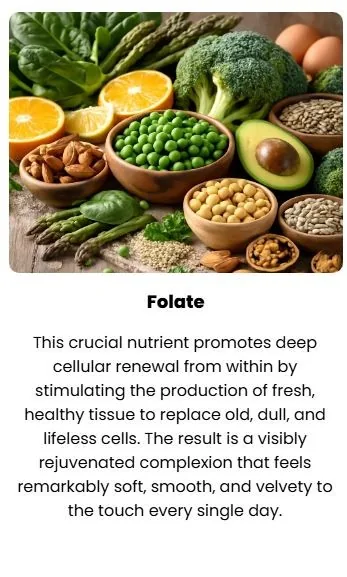
4. Folate (442 mcg DFE from 260 mcg folic acid) Supported
Printed: 442 mcg DFE (111% DV) · reference: 400 mcg DFE/day RDA for adults
Why does Gelagen's folate show two different numbers?
Because the label does the conversion correctly. Folic acid is absorbed more efficiently than food folate, so 260 mcg of folic acid counts as 442 mcg of dietary folate equivalents. Careless labels skip this; Gelagen's does not.
Folate drives cell division, and a hair follicle in its growing phase divides constantly, which is the mechanism behind its place here. The upper limit for folic acid specifically is 1,000 mcg a day, so 260 mcg leaves ample room unless you stack another folic acid product.
Worth knowing: Do not combine with another folic acid supplement without totalling the folic acid. · NIH ODS — Folate
5. Pantothenic acid (as d-calcium pantothenate) Supported
Printed: 5.2 mg (104% DV) · reference: 5 mg/day adequate intake for adults
Does pantothenic acid do anything for hair?
It forms the backbone of coenzyme A, which every energy pathway in a skin cell runs through. At 5.2 mg it is a full nutritional dose. The hair claims attached to “B5” are older and weaker than the marketing implies.
Pantothenic acid deficiency is almost unknown in people eating a normal diet, so this is a maintenance-level top-up rather than a lever. There is no upper limit set because toxicity has not been observed at supplemental doses.
Worth knowing: None. · NIH ODS — Pantothenic acid
6. Vitamin A (as retinyl acetate) Partly
Printed: 630 mcg (70% DV) · reference: 700–900 mcg RAE/day RDA; 3,000 mcg upper limit
How much vitamin A is in Gelagen, and does it matter?
630 mcg of preformed vitamin A per serving — 70% of the Daily Value. That is a meaningful amount of the nutrient most central to skin turnover, and it is the one ingredient on this panel with a hard upper limit worth respecting.
Retinyl acetate is preformed vitamin A, which accumulates; the tolerable upper intake for adults is 3,000 mcg a day from all sources. Two gummies leave room, but stacking Gelagen with a multivitamin or another beauty product can close that gap quickly. Preformed vitamin A also needs care in pregnancy. This caution appears on neither competing page.
Worth knowing: Total your vitamin A across every supplement. Ask a doctor first if pregnant or planning to be. · NIH ODS — Vitamin A
7. Vitamin C (as ascorbic acid) Partly
Printed: 20 mg (22% DV) · reference: 75–90 mg/day RDA; skin studies use far more
Is 20 mg of vitamin C a skin dose?
No. It is under a quarter of the adult RDA, in a product whose front label leads with skin. Vitamin C is the one nutrient with a direct, required role in collagen synthesis, and this is the smallest relative amount of any vitamin on the panel.
A single orange supplies three to four times this amount. The skin-appearance studies on oral vitamin C use hundreds of milligrams, often alongside other antioxidants. Gelagen's 20 mg is not wrong — it is printed honestly — but it is a gesture toward the mechanism rather than a dose of it. The competing pages present vitamin C as a headline; the number does not support that.
Worth knowing: Get your vitamin C from fruit and vegetables. This amount will not cover a low intake. · NIH ODS — Vitamin C
8. Vitamin D (as cholecalciferol) Partly
Printed: 10 mcg (400 IU) (50% DV) · reference: 15–20 mcg/day RDA for adults
Why is vitamin D in a skin gummy?
Vitamin D contributes to normal immune function, and low winter levels are common. At 10 mcg it is half the adult RDA — a reasonable top-up, though the link to skin appearance is indirect.
Cholecalciferol is the preferred form. The amount is modest and safe; the upper limit is 100 mcg a day. It is the kind of inclusion that rounds out a multivitamin rather than driving a beauty claim.
Worth knowing: None at this amount. · NIH ODS — Vitamin D
9. Vitamin E (as d-alpha tocopheryl acetate) Partly
Printed: 7.4 mg (49% DV) · reference: 15 mg/day RDA for adults
What does vitamin E contribute here?
It is the antioxidant in cell membranes, and the natural d-alpha form used here is better retained than synthetic dl-alpha. At 7.4 mg it is about half the RDA — a sensible amount, and a better form than many labels use.
Vitamin E works with vitamin C, which regenerates it after it has neutralised a free radical. That pairing is sound in principle; at 20 mg of vitamin C the partner is undersized. Nuts, seeds and oils remain the main dietary sources.
Worth knowing: None at this amount. · NIH ODS — Vitamin E
10. Zinc (as zinc citrate) Partly
Printed: 2.7 mg (25% DV) · reference: 8–11 mg/day RDA for adults
Is Gelagen's zinc a useful amount?
The form is good — zinc citrate is well absorbed, unlike the zinc oxide many gummies use — but the amount is a quarter of the Daily Value. Zinc supports normal skin and repair; 2.7 mg is a top-up, not a therapeutic dose.
Zinc deficiency does show in skin and hair, and the studies that use zinc for those problems use 15 to 30 mg. The choice of citrate is a genuine quality signal. The quantity is not a lever.
Worth knowing: None at this amount. · NIH ODS — Zinc
11. Iodine (as potassium iodide) Partly
Printed: 42 mcg (28% DV) · reference: 150 mcg/day RDA for adults
Why is iodine in a beauty gummy?
Iodine is needed for thyroid hormone, and thyroid function sits behind hair and skin health. At 42 mcg it is a modest top-up — and it is a reason for anyone on thyroid medication to ask a doctor before starting.
Both too little and too much iodine disturb the thyroid, and thyroid disorders are among the most common treatable causes of hair thinning. The amount here is safe for most adults. Combined with the biotin lab-test issue above, it makes Gelagen a product to mention to a thyroid clinician rather than take quietly.
Worth knowing: Ask your doctor first if you have a thyroid condition or take thyroid medication. · NIH ODS — Iodine
12. Choline (as choline bitartrate) Flagged
Printed: 0.04 mg (40 mcg) (0% DV) · reference: 425–550 mg/day adequate intake for adults
How much choline is in Gelagen?
Forty micrograms. The label itself prints this as 0% of the Daily Value, which is honest and also tells you everything: the adequate intake is about ten thousand times larger.
Choline is a real nutrient with real roles in cell membranes, and the amount here is roughly what you would get from a crumb of egg yolk. It is on the panel to be on the panel. Credit the label for printing the zero; discount the ingredient entirely when weighing the product.
Worth knowing: Trace amount. Get choline from eggs, soy and meat. · NIH ODS — Choline
13. Inositol Flagged
Printed: 40 mcg (no DV established) · reference: 2,000–4,000 mg/day in most human studies
Is there a meaningful amount of inositol in Gelagen?
No. Human studies on inositol use two to four grams a day. Forty micrograms is fifty to one hundred thousand times less.
Inositol appears in a handful of beauty formulas on the strength of hair-related folklore rather than evidence. The amount here is a trace, and no Daily Value exists to print beside it. As with choline, the label is honest about the figure; the figure is not worth anything.
Worth knowing: Trace amount. · NIH ODS — fact sheets
What is not on the panel
- No collagen — despite the supplied how-it-works artwork claiming “hydrolyzed collagen”
- No hyaluronic acid — also credited on that artwork, also absent from the panel
- No vitamin C at a skin-study dose (20 mg printed; studies use hundreds of mg)
- No selenium, silica or ceramides, common in competing skin formulas
- No omega-3 fatty acids
- No sugar-free option — 3 g added sugar per serving
The three bands, explained
Supported (five): the B group — biotin, B12, B6, folate, pantothenic acid — all at or well above the Daily Value, with good forms. Partly (five): vitamins A, D and E, zinc and iodine, present at 25–70% DV — real top-ups, not levers; vitamin C at 22% sits here only because it is printed honestly. Flagged (three): biotin for the lab-test caution its dose triggers, and choline and inositol as trace amounts that pad the count.
The other missing disclosures
- No lot number or expiry visible on the supplied label art.
- No third-party testing named, and no certificate of analysis offered.
- No manufacturer named beyond the Lakeland FL distributor.
Read how the mechanism holds up, or see the claim-by-claim rulings.
Questions people ask about this
What are the ingredients in Gelagen?
Thirteen vitamins and minerals, all printed with amounts: biotin 5,000 mcg, B12, B6, folate, pantothenic acid, vitamins A, C, D and E, zinc, iodine, choline and inositol, in a pectin gummy base.
How much biotin is in Gelagen?
5,000 mcg per two-gummy serving — 16,667% of the Daily Value, and enough to interfere with certain blood tests.
Is 20 mg of vitamin C enough for skin?
No. It is 22% of the adult RDA; oral skin studies use hundreds of milligrams.
Does Gelagen contain collagen or hyaluronic acid?
No. Neither is on the panel, although the supplied artwork claims both.
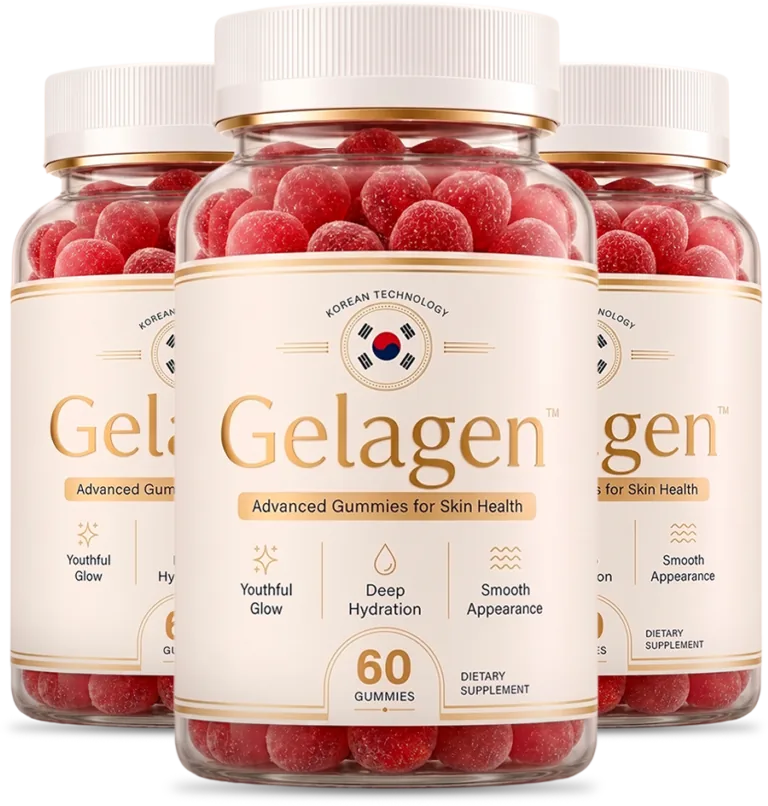
Gelagen Official Website
per bottle on the 6-bottle pack · free US shipping on 3 and 6
Check Current Price 60-day guarantee · official checkout only